Introduction
This project showcases a series of character animations I created to explore movement, emotion, and visual storytelling through motion design. Each animation focuses on how subtle gesturescan bring a character to life and express personality without dialogue. Working with simple shapes and clean timing, I experimented with rhythm, exaggeration, and pacing to develop animations that feel engaging, playful, and expressive. These pieces highlight my ability to blend design, motion, and character-driven visuals into cohesive animated moments.
The Greenhouse
“The Greenhouse” is a short atmospheric animation that combines environment design, character motion, and sound to create a calm, sensory narrative. The piece opens with a close-up of a dripping faucet, setting the tone through subtle movement and quiet rhythm. As the scene widens, plants sway gently in the wind, their motion driven by layered easing and soft, looping cycles that add life to the space.
My character enters the environment carrying a small potted plant, with footstep sounds synced to each movement to enhance the sense of presence. Using rotation, I animated a slowly spinning fan, paired with light wind effects that bring coherence to the environment and help guide the pacing of the scene. The animation concludes with a plant sprouting and growing—symbolizing care, patience, and the quiet magic of nurturing a space.
Sound design plays a key role throughout the piece: water drips, shifting air, and gentle music work together to create an immersive, greenhouse-like calm. This project allowed me to blend visual storytelling, environmental motion, character animation, and audio elements into one cohesive, atmospheric moment.
Waving Animation
For this piece, I created a puppet-style waving animation of my character using Adobe After Effects. The goal was to explore how subtle, controlled movements can communicate warmth and personality. Using AE’s Puppet Pin tool, I rigged the arm and upper body to create a smooth, natural wave with just enough bounce to feel friendly and expressive. I focused on timing, overlap, and easing to keep the gesture soft and believable, while maintaining the clean, minimal style of the character design.
This animation served as a study in how simple motions—like a wave—can transform a static illustration into something lively and welcoming. It also allowed me to experiment with basic rigging and movement flow, reinforcing how expressive even the smallest gestures can be in character animation.
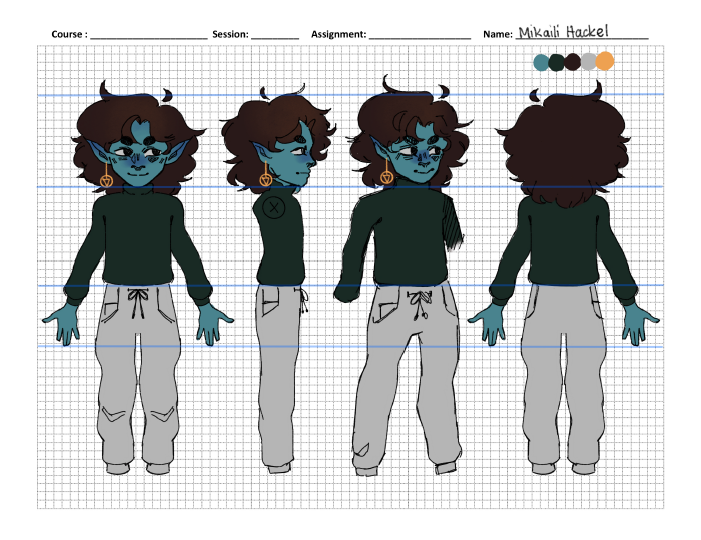
To support the animation process, I created a full character turnaround outlining the front, side, and back views of my design. This turnaround served as the foundation for consistent movement, helping me understand the character’s proportions, shapes, and personality from every angle. By breaking the design down into simple, readable forms, I ensured that the character remained cohesive whether static or animated.
This step was essential for planning the puppet animation in After Effects, providing clear reference points for rigging and movement. The turnaround not only strengthens the visual identity of the character but also demonstrates my ability to translate an illustration into an animation-ready model.